
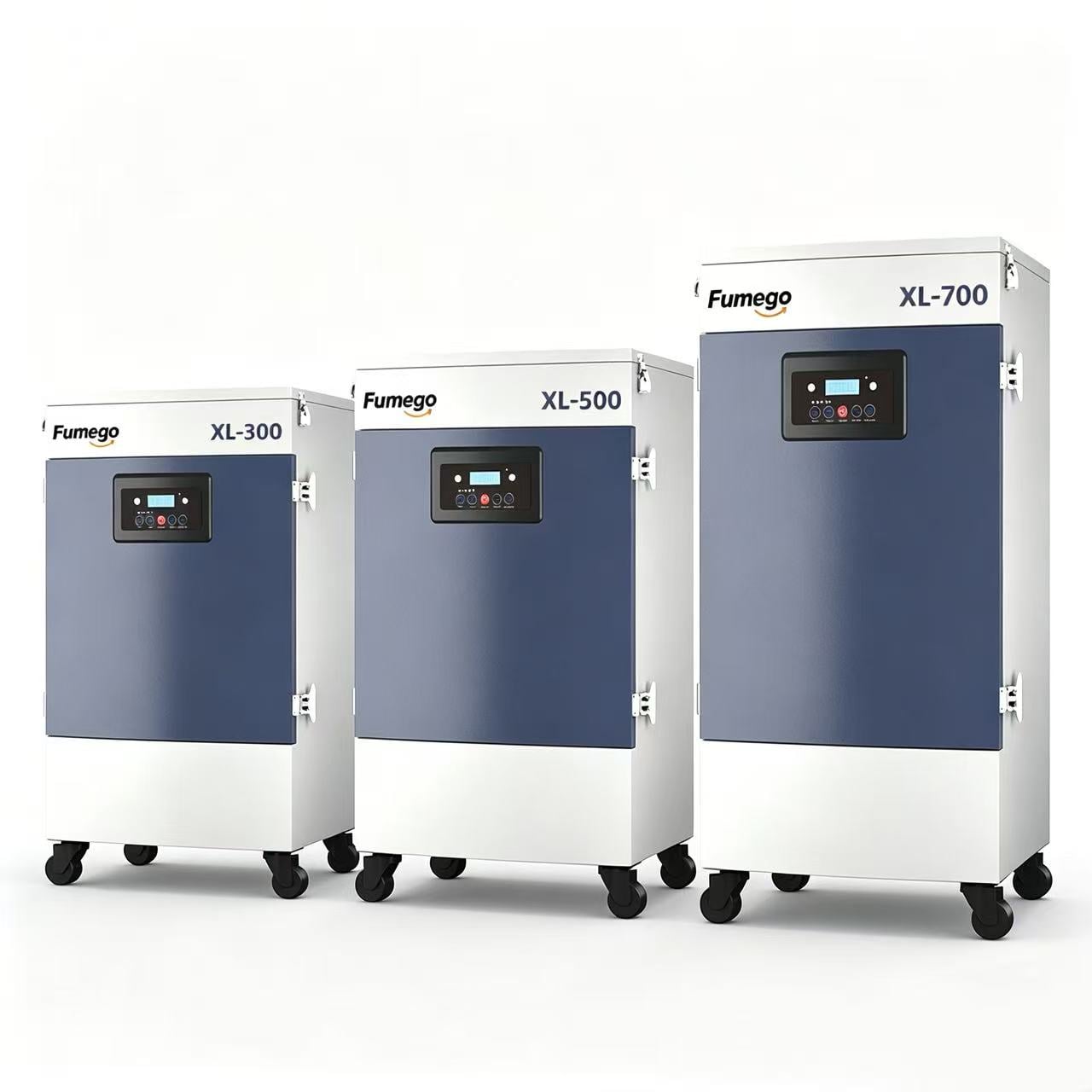
A small engraving workshop with two production machines should treat extraction as a shared bank rather than two independent purchases: one floor-standing unit with capacity for both enclosures, a filter bank that absorbs the combined load, and a si...
VIEW MORE
An engraving workshop's extraction demand is set by the job mix — deep engraving, light marking, occasional cutting — and by the machine count, not by the laser's wattage alone. A workshop that engraves wood and acrylic for a few hours d...
VIEW MORE
Small commercial workshops choose laser extractors by the airflow number on the datasheet, then lose a surprising share of that flow in the duct run, the elbows and the hood opening before it reaches the machine. The figure that survives the install...
VIEW MORE
A small commercial workshop outgrows its first extractor in a predictable pattern: engraving becomes cutting, hours rise, a second machine arrives, and the smoke stops clearing between jobs. The upgrade path follows the same logic at each step &mdas...
VIEW MORE
Home and small commercial laser users need the extractor sized to the machine and the hours, in three clear steps: desktop units for light engraved work, floor-standing purifiers around 450 m³/h for cutting machines and heavier schedules, and h...
VIEW MORE
Technicians who solder for a living keep the extractor that respects the working conditions: quiet at operating speed, quick to service and steady in capture near the iron. Those three factors matter more than the airflow ceiling, because an uncomfo...
VIEW MORE
An electronics workbench rarely does one kind of soldering. The same station usually runs an iron for through-hole work, a hot-air rework tool for chips, and sometimes a small tin pot for tinning wire, and each load places a different demand on the ...
VIEW MORE
A repair lab with several occupied benches should buy extraction as a system, not as one unit per station: one arm per bench, airflow that covers the combined load and a filter bank that ages on a shared schedule. A cluster of desktop units works on...
VIEW MORE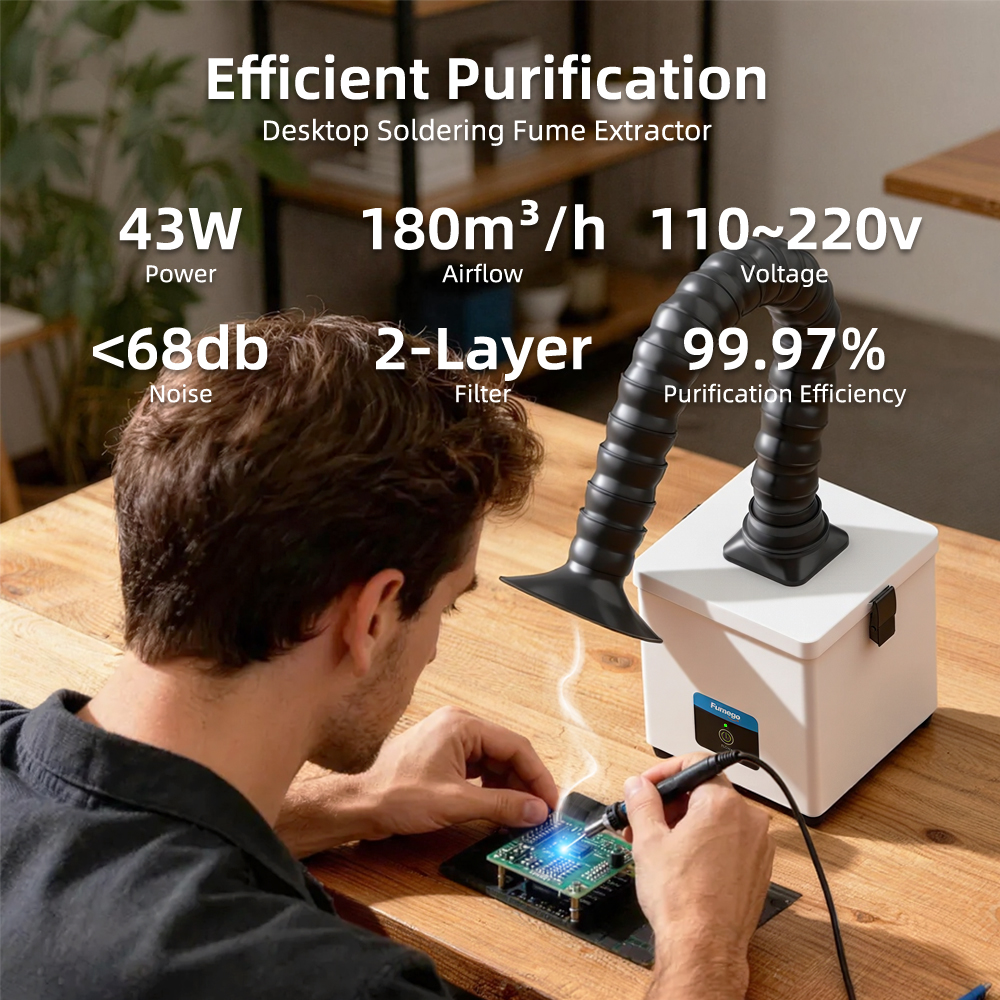
A single electronics workbench needs an extractor that matches the iron, stays quiet while the technician works and loads filters slowly enough that replacement is a planned task, not a weekly one. Fumego's desktop purifiers cover this size class wi...
VIEW MORE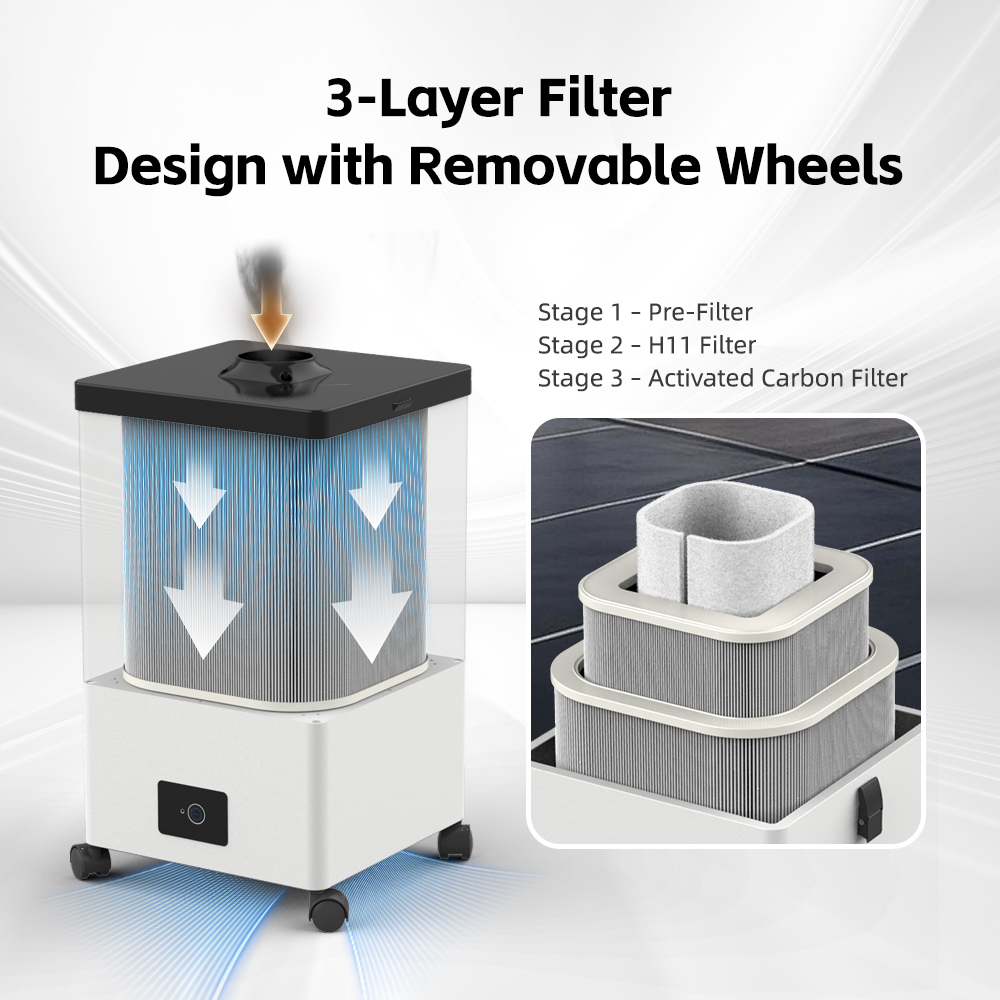
Home users who move from engraving to cutting usually discover the extractor first, because cutting produces heavier smoke, stronger odour and more frequent filter changes. Engraving on wood at low power makes a light plume; cutting the same wood re...
VIEW MORE
Technicians soldering every shift need an extractor judged on hours, not on peak airflow: sustained capture at the iron, a noise level that does not fatigue, and a filter that keeps pace with a daily load. That combination is what separates a bench ...
VIEW MORE
Home laser users should choose an extractor by three figures and one habit: airflow matched to the machine, noise below the room's comfort level, filter media that removes odour, and the discipline of replacing the carbon stage. Fumego's desktop and...
VIEW MORE EN